
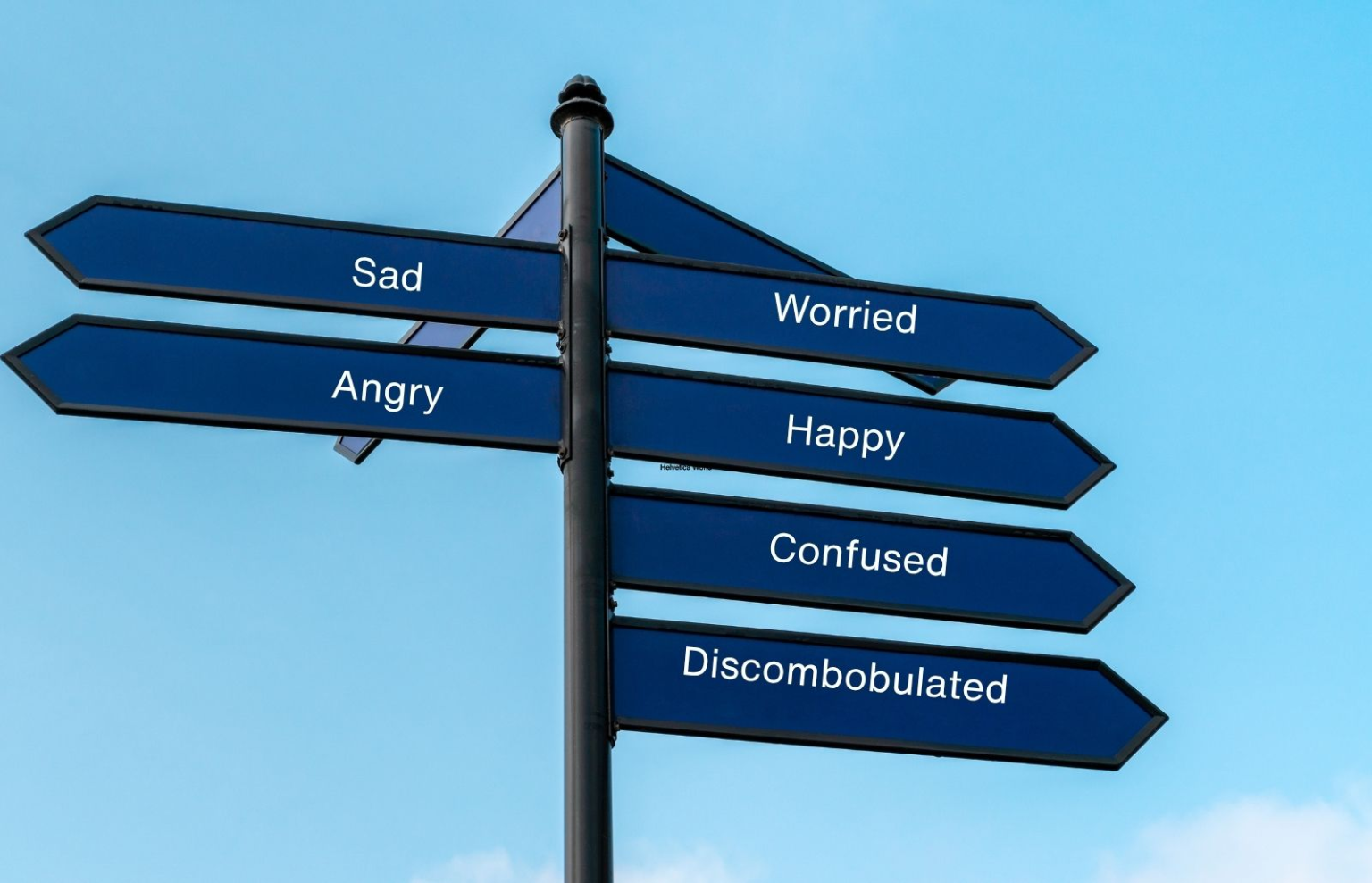
Sometimes we make the subject of emotions—and emotions themselves—more complicated than they actually are. The truth is, emotions are both incredibly complex and remarkably straightforward. They are wired into us as part of being human.
Emotions are signals. They show up in our bodies, in our thoughts, and in our behaviors to let us know something is happening. Fear tells us we might be in danger. Anger tells us a boundary has been crossed. Sadness tells us we’ve experienced loss. Joy tells us something matters and is worth celebrating.
Straightforward, right?
The problem isn’t usually the emotion itself—it’s how we learned to relate to emotions, beginning in our families of origin. Many of us didn’t grow up in households where emotions were understood, welcomed, or supported. Instead, we learned to suppress them, second-guess them, or even take responsibility for our parents’ emotions that weren’t ours to carry.
When we look at the emotional climate of our childhood homes, we often find patterns that explain why emotions feel confusing, overwhelming, or even dangerous today. Let’s explore some of those patterns in more depth.
1. Parents Don’t Give Language to Emotions
Young children don’t automatically know what “frustrated” or “disappointed” means. They feel those emotions in their bodies, but they don’t yet have the words to name them. This is where parents play a vital role.
A parent might say:
- “You look sad that your toy broke. That makes sense—it was your favorite.”
- “I can tell you’re frustrated because the puzzle piece won’t fit. That’s a hard feeling.”
- “You’re really excited about going to the park! I see how happy you are.”
These moments of attunement teach children that what they feel inside has a name and that their inner experiences make sense. Without this, emotions remain vague and confusing.
When children don’t receive this guidance or parents impose their own interpretations of what a child “should” feel—they may grow up disconnected from their inner world. As adults, this can look like:
- Struggling to name feelings (“I don’t know how I feel”).
- Relying on others to define what’s “ok” to feel.
- Feeling out of touch with one’s needs.
2. Parents Are Boundaryless With Their Emotions
In some homes, parents’ emotions dominate the atmosphere. A parent may explode in anger, withdraw in depression, or broadcast their anxiety throughout the household. The child learns quickly (although often unconsciously): “My parent’s emotions come first. Mine don’t have space here.”
This often leads to a kind of role reversal—the child becomes the caretaker of the parent’s emotional state. Instead of learning how to process their own emotions and feeling supported, the child becomes hyper-attuned to keeping the parent calm, happy, or stable.
As adults, these children often:
- Struggle with people-pleasing.
- Feel anxious when someone they love is upset.
- Find it nearly impossible to voice their own needs.
The tragedy here is that the child’s emotional development is stunted in service of preserving the parent’s stability.
3. Emotions Are Invalidated
Invalidation comes in many forms: minimizing, dismissing, shaming, ignoring, or telling a child how they “should” feel.
Some examples:
- “Stop crying—it’s not that bad.”
- “Why are you mad about that? You’re overreacting.”
- “Don’t be scared—there’s nothing to be afraid of.”
At first glance, these statements might sound like parents trying to reassure. But what the child actually hears is: My feelings don’t matter. My experience is wrong.
Over time, children internalize that message. As adults, they may:
- Second-guess their reactions.
- Struggle to set boundaries because they don’t trust their own instincts.
- Feel ashamed for having emotions at all.
Invalidation leaves a child emotionally isolated—even when surrounded by people.
4. There’s No Support or Comfort to Handle Emotions
Even when parents don’t outright dismiss emotions, some simply don’t know how to provide comfort.
Maybe your parents froze when you cried. Maybe they told you to “deal with it yourself.” Or maybe they were too distracted, stressed, or unavailable to notice what you were going through.
Children need more than permission to feel—they need a safe presence who helps them regulate those feelings. Daniel Siegel describes this as the need to “feel felt.” That’s what teaches a child: Emotions are a part of the human experience. There’s nothing wrong with big emotions and in fact, they’re a gift. And most importantly, they aren’t meant to always be experienced in isolation.
Without that support, children may grow into adults who feel overwhelmed by their feelings. Even mild sadness or anger can feel unmanageable, because no one ever helped them build the internal capacity to hold emotions safely.
5. Children Feel Responsible for a Parent’s Emotions
One of the most painful and damaging dynamics in an unhealthy family system is when children are made to believe they are responsible for their parent’s emotions.
This could sound like:
- “If you weren’t so difficult, I wouldn’t be so stressed.”
- “You made me so mad I had to yell.”
- “You’re the only one who makes me happy.”
Even when not said directly, children often absorb this message by watching how their parent responds to them. They learn to monitor moods, adjust their behavior, or suppress their needs to keep the household stable.
The result? Adults who:
- Feel guilty when others are upset.
- Take on responsibility for problems that aren’t theirs.
- Burn out from constantly caretaking the emotions of others.
This is not a child’s job. But many of us carried that job description into adulthood without realizing it.
Why This Matters Now
If you’re reading this and recognizing your family of origin, you might feel sadness, anger, or even relief that someone is finally naming what you lived through. All of those reactions are valid.
What matters most is this: while you can’t change the family you came from, you can change the way you relate to emotions now. Healing looks like:
- Learning the language of emotions for yourself. Expanding your emotional vocabulary. Naming what you feel, even if it feels clumsy at first.
- Validating your own inner experience. Telling yourself: “This is what I feel, and it matters, whether or not it makes sense right now.”
- Building emotional capacity. Learning to stay with emotions rather than immediately pushing them away.
- Separating responsibility. Reminding yourself: “I am responsible for my feelings, and you are responsible for yours.”
This work takes time and requires safe, supportive relationships where new patterns can be practiced. A skilled therapist can guide you on healing the original wounding around your emotions. And honest conversations with trusted people in your life will further the healing process.
Final Thoughts
Your emotions are not the enemy. They are not too much. They are not a sign of weakness.
They are a compass—pointing you toward what matters, what hurts, what needs tending. When you learn to listen to them with compassion and clarity, they stop being overwhelming and start being deeply informative.
If you see yourself in what I’ve described here, I encourage you to reflect on your story. Which of these patterns showed up in your home? How have they shaped the way you experience emotions today? And what might healing look like for you moving forward?
You do not have to carry this work alone. Healing is possible, and it begins by honoring your emotions—maybe for the very first time.